Nafisa spoke with great wisdom and honesty about the tough calls and decisions that shaped the journey.
3 lessons from our conversation that stayed with me:
1. Don’t settle for cheap at the expense of quality
The drive to show cost-effectiveness and bring costs down as you scale counts. But the important part is finding ways to do that without compromising the service people receive, or what they’re entitled to.
For Nafisa, part of the problem was that the bar was too low to start:
“We really think small, and that’s not what women deserve. Women in Sub-Saharan Africa deserve so much more than what we’ve been giving them.”
So WAJAMAMA holds on to what others might cut, like mental health support, trauma-informed care and a dignified experience that encourages women to come back. They’re documenting why it matters so other governments can learn from Zanzibar.
2. Design for the system government already pays for
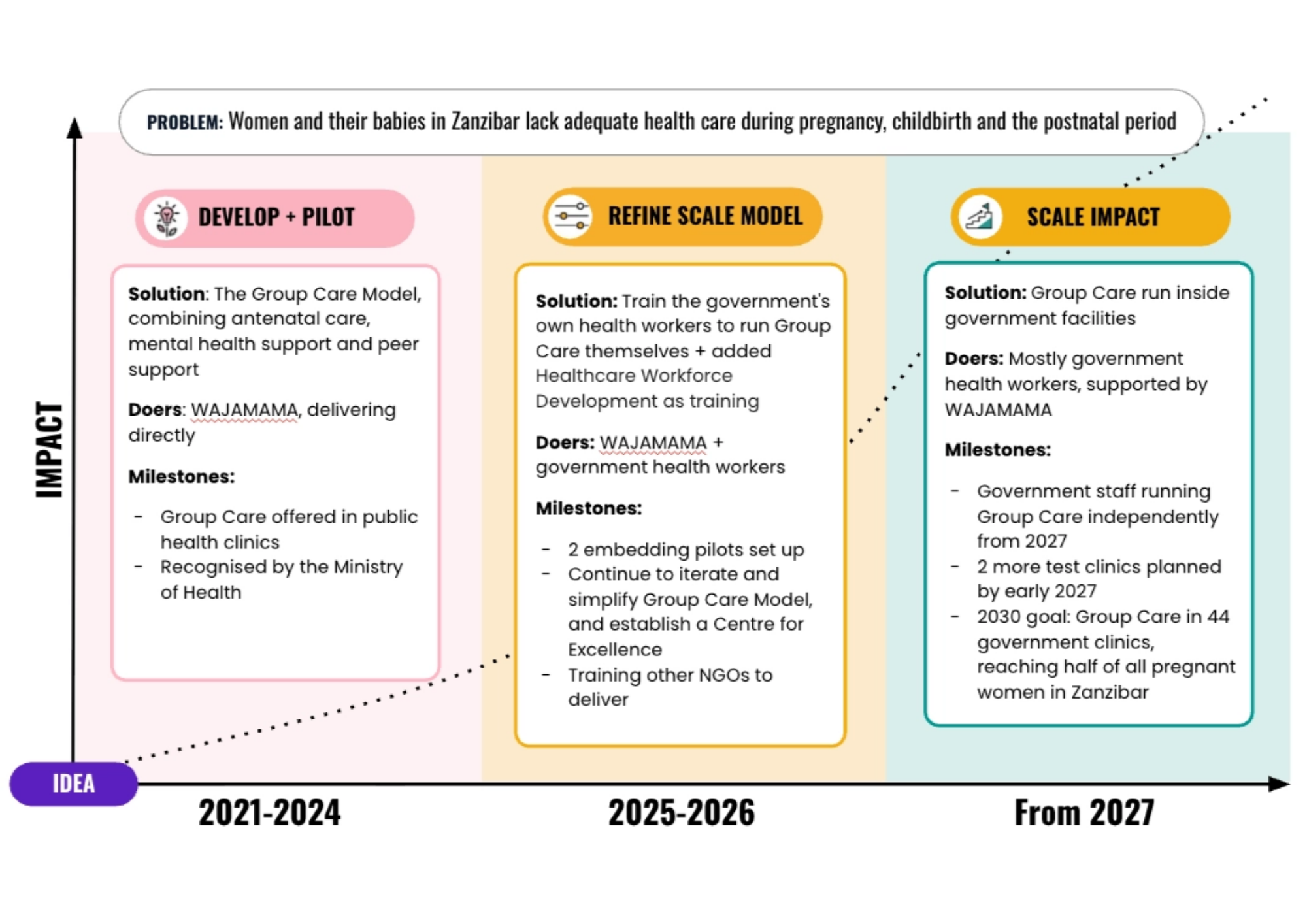
They designed group care around the nurse-midwives and mental health officers the government already employs.
“We don’t need to come back and ask them for more resources to deliver group care when it’s the same workers, already in the budget.”
Getting there took years of building trust with government, co-designing from the start, and above all, making it clear that: “We’re here as partners.”
3. If quality slips, resist taking back control. Invest in making quality possible without you there.
Early pilots showed that government clinicians were under-trained and overstretched. The tempting fix was to step back in and deliver themselves.
Instead, WAJAMAMA invested in mentorship, simulation-based training, shifting tasks to community health workers and helping establish Zanzibar’s first high-fidelity simulation lab.
When you scale through others, their quality of delivery is what matters, not yours. Strengthen their capacity for it, even if it takes longer.
Underpinning all this is a focus on solving the problem, not on the solution.
Nafisa’s mountaintop is “healthy mamas, healthy babies”. Group care is the answer today, but they’ve made their organisation ready to adapt and change course if they find a better one.
I loved our conversation. There’s a lot more wisdom there in the full session, which you can watch here.
And if you’d like to join our next ScaleTales, sign up here.