1. Stepping back (and sometimes slowing down) speeds up progress
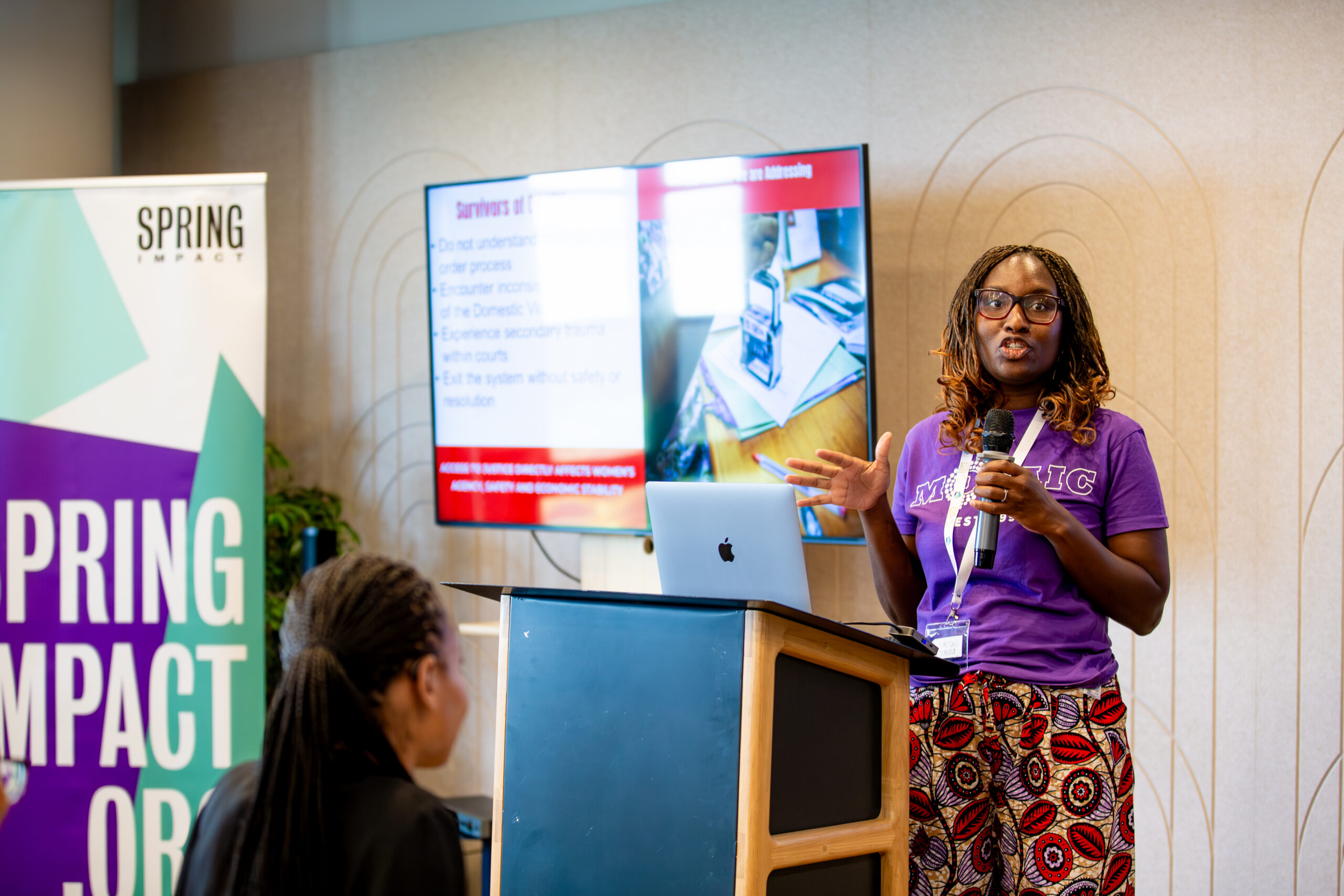
This is as much a leadership challenge as it is an organisational one. When Tarisai joined MOSAIC as an Executive Director, what was there was already working. They were doing incredible work, but they were also at maximum capacity which meant reaching more people in South Africa with accessible court support would’ve added even more pressure. So Tarisai decided to step back and slow down, to test assumptions, explore working with partners before committing and to reimagine what MOSAIC needed to do—and stop doing—to get there.
2. Impact cannot be achieved alone
Scale is often confused with growth and that confusion makes it a frightening concept. Growth can sometimes imply you need to carry the weight of the problem, as a leader and organisation. Scale offers a different logic: understanding how you fit into an ecosystem, who your partners are, and how you can broaden the impact you care about without having to deliver it all yourself.
For MOSAIC, this meant partnering with the Department of Justice, national NGOs, and CBOs, and shifting from delivering services directly to training and enabling others to lead delivery in their own communities.
3. Knowing what matters makes it easier to have constructive conversations with funders
This came up repeatedly across the event, from Tarisai and from others. When organisations chase funding rather than set a direction, it becomes hard to measure what matters and harder still to build a coherent story from it. But when you get clear about what you are building towards, something unlocks.
MOSAIC’s clarity about their model and their role made it possible to bring their story with confidence, to funders, to partners, to the Department of Justice.
I’ve worked alongside MOSAIC since I joined Spring Impact. They were among my very first clients. Some years later, I joined their board of trustees for their newly established UK entity, something I’m genuinely proud of.